 Khaqan
Why I published my case studies without numbers
An impressive percentage should survive one ordinary question: how did you count it?
In this note
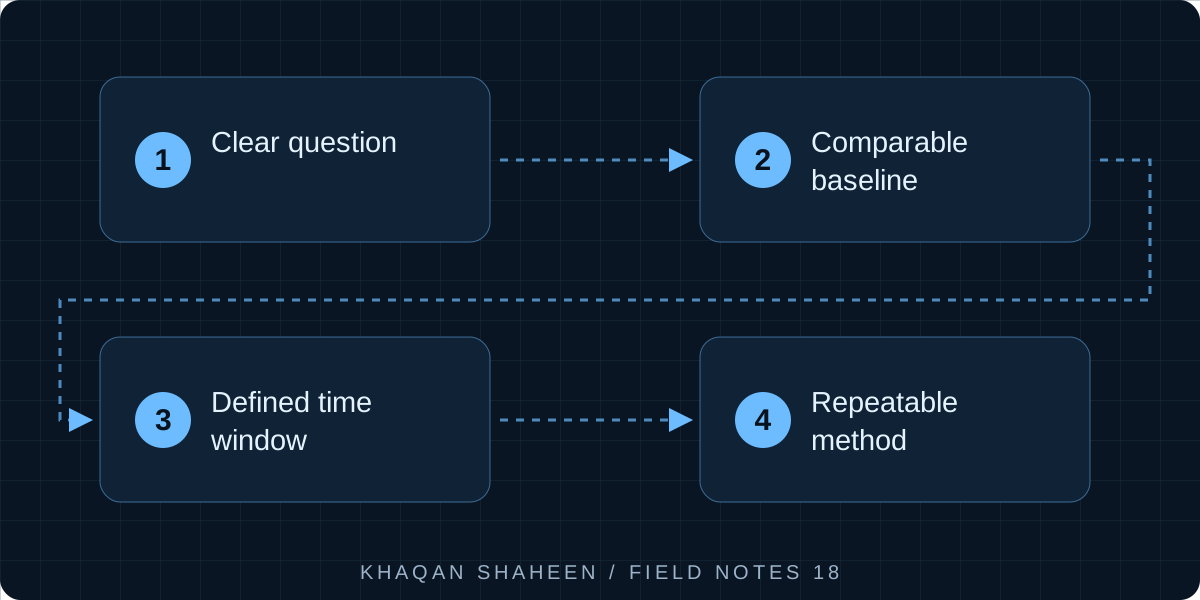
- 01Clear question
- 02Comparable baseline
- 03Defined time window
- 04Repeatable method
Because a number I cannot show how I measured is worse than no number. The scope is honest: six sites, five countries, one ERP, around 150 users, five AI systems in production. The results will get figures when I have measured them, with the method and the date attached.
Put the method beside the number
The early drafts had numbers in them. They looked like every other set of case studies you have read: a percentage faster, a share of hours saved, an uptime with two nines in it. Then I made myself write, next to each one, a single line saying how it was measured. Most of them did not survive that line. Faster than what, measured over which period, by whom, against which baseline? If I could not answer in one sentence, the number was a guess wearing the clothes of a fact, and I had put it there because the page looked empty without it.
What survived was scope, and scope is the part I can defend. The number of sites and countries. The number of users. The number of AI systems in daily production. The models and workflows in a module tree I hold. A reader can ask me to show any of those, and I can. That is a different kind of claim from a percentage, and I would rather make the kind I can back up.
What scope can honestly show
There is a cost. Hiring managers and recruiters are trained to look for figures, and a case study without them reads as modest, possibly as thin. I decided that modest and true beats impressive and unverifiable, because the second kind falls apart in the interview, which is the only room where it matters. "Show me how you measured that" is a fair question, and I want to be able to answer it every time.
The figures will come. The sales agent logs every conversation, so I can count conversations and the share that arrived outside working hours. The OCR pipeline logs every document, so I can count documents and give the date range. When those counts are run they will go in with the window they cover and the way they were counted. Until then the honest sentence is that I hold the logs and can produce the count on request, so that is the sentence on the page.
The rule for publishing a result
The rule going forward is short. A number, its method and its date, or nothing.
What does “95% correct” leave for a person?
Change the volume and first-pass accuracy. This calculates review workload, not measured performance of my systems. A correct extraction still needs business validation.
50 documents need correction in this example.
Formula: volume × (1 − accuracy / 100). Default: 1,000 × 5% = 50.